
Some things take a little longer to get. New music and rediscovered recordings from the Finest Drops, Submarine on Mars, Alien Witch, Sun Dial, Tadpoles, Dead Meadow, Tangerine Stoned, Tobia Poltronieri, Tren Go! Sound System, Kardeathian, Hermanos Menores, and Echoes of Distant Stars.
| Time | Artist | Track Title |
|---|---|---|
| 01:24 | the Finest Drops | lucky Star |
| 07:26 | Submarine on Mars | Burned By The Sun |
| 16:03 | Alien Witch | Death Wave |
| 24:30 | Sun Dial | Outer Limits to Yr Brain (Part 1) |
| 27:37 | Tadpoles | Frances The Dancer (Alien Mix) |
| 32:37 | Dead Meadow | Everything's Goin' On (Comittee to Keep Music Evil Session) |
| 40:52 | Tangerine Stoned | I Shoot The Moon |
| 43:23 | Tobia Poltronieri | Cascata Gallurese |
| 45:34 | Tren Go! Sound System | Muslin Beat |
| 52:51 | KARDEATHIAN | Six |
| 56:01 | Hermanos Menores | Marco |
| 63:27 | Echoes of Distant Stars | Loinnir |
2025
2026
2027
This episode features three archival releases from bands that have been part of the psychedelic underground for decades. Gary Ramon discovered a previously unreleased mix of an early performance of "Outer Limits to Yr Brain" while revisiting Sun Dial's 1991 recordings. Todd Parker of Tadpoles rediscovered an alternate mix of Whirlaway when technical problems threatened to prevent the album from being released on vinyl. What began as a practical solution turned into an opportunity to present a different creative vision of the album. And Jason Simon of Dead Meadow recalls how a trip to California in the early 2000s led to the discovery of a like-minded psychedelic music scene and a recording session with Anton Newcombe and Rob Campanella.
Several of the interviews for this episode also touch on the importance of physical space in making music. The Finest Drops and Pedro Pestana of Tren Go! Sound System discuss the economic pressures threatening independent music venues and communal rehearsal spaces. Tangerine Stoned draw inspiration from the strange melancholy of the Italian Riviera in winter, while Tobia Poltronieri assembled an album from fragments of recordings made in different places over fifteen years. For Poltronieri, hearing those recordings isn't an exercise in nostalgia but a way of experiencing those places again in the present. Sometimes going back is a way of moving forward.
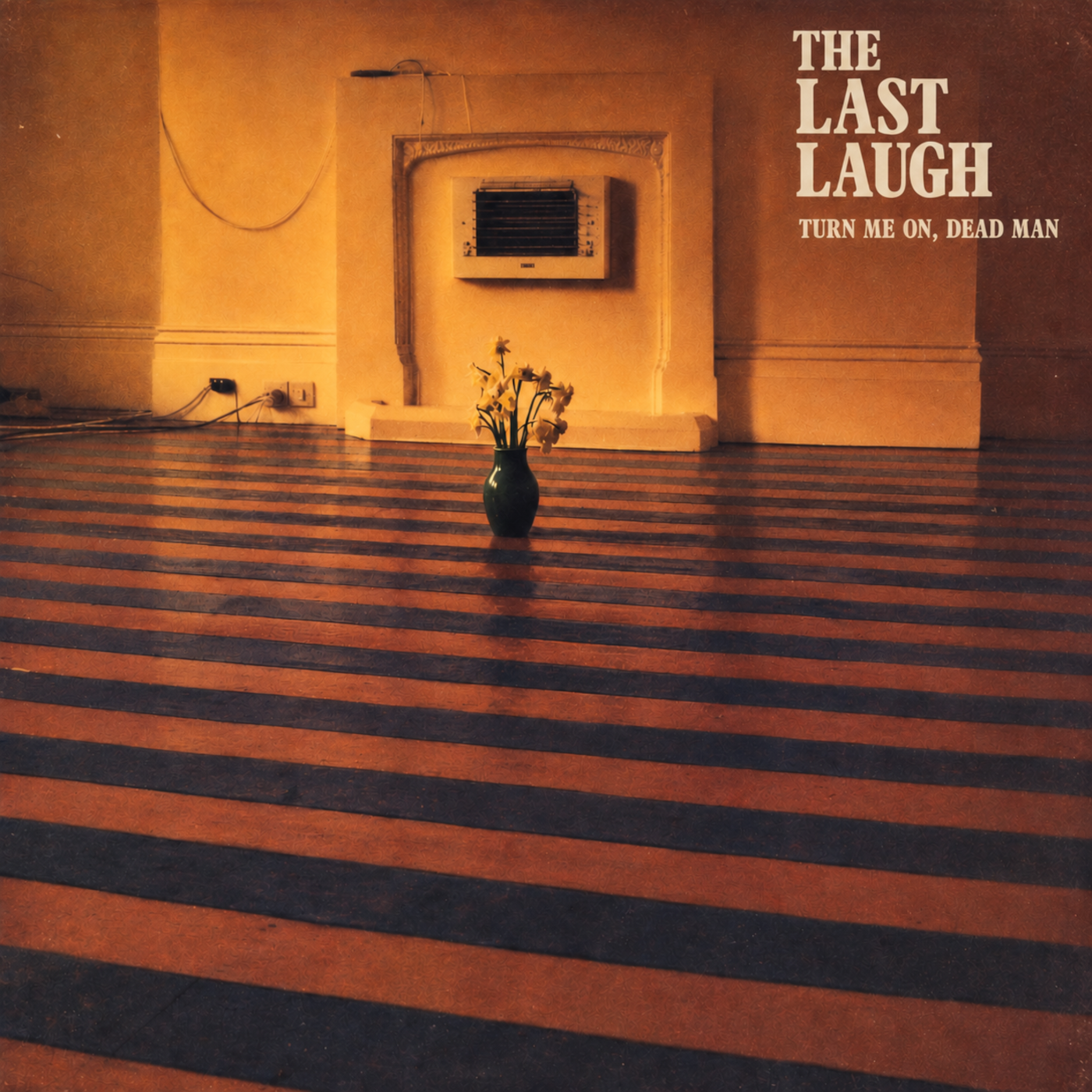
My father-in-law once told me he thought the expression "He who laughs last laughs best" meant that someone who took longer to understand a joke appreciated it all the more. I actually prefer his interpretation to the conventional one. There's something appealing about the idea that the passage of time can deepen our appreciation of something rather than simply afford us an opportunity for revenge. The audio clips for this episode come from Stanley Kubrick's 1956 film The Killing, a film where the characters don't realize the joke's on them. The cover is a nod to Syd Barrett's The Madcap Laughs.
The Finest Drops hail from North East England, playing Alternative, Shoegaze influenced music with jangly melodic guitar layers and a love for songs that are longer than would normally be played on the radio.
Stu Robson (vocals, guitars, bass), Dave Hewitt (guitars), Ad Stenhouse (drums), Cerys Robson (keys)
TMODM: In the notes for endless Today, you describe a sense of dislocation that carries over from to live between the Worlds, but this time the songs are more firmly rooted in the here and now. What brought about that change? Was there something in particular that you felt compelled to write about on this record?
the Finest Drops: The previous record was more otherworldly in subject matter with the songs about folklore and wise women and 'weird England' stuff. This album is more about the English class system and the grind of working a job. Mind you there are 2 songs about shamanism on it so it's not all drudgery. I guess I was just losing hope in anything getting better, everything seems to be moving in the wrong direction, towards the right, away from nature and towards machines. This album is the result of all that.
TMODM: You describe yourselves as having a love for songs that are longer than would normally be played on the radio. What appeals to you about working with longer song structures? Does that give you more freedom to explore the interplay between the guitars or is it simply a natural consequence of the way you write songs?
the Finest Drops: We like to come up with melodic guitar parts, layer them up and see where they go. We're not a jam band but we do like the freedom of exploring ideas. I'm often thinking how we can make the songs sound more epic (or longer)! We like other bands that do this too (Can, Built to Spill, Floyd), so longer songs feel natural to us. If you have a good riff it seems a waste to keep it to 2 mins.
Also, we don't have any desire to aim for commercial acceptance. There's no label boss telling us what to do in the business, so our songs end up much too long for the Radio.
TMODM: I was interested in your comments about the disappearing venues and increasingly limited spaces where people can get together to make music. You've maintained a DIY approach over the course of 3 albums. How has the independent music scene in the North East of England changed since you started the Finest Drops? Are you finding reasons to be optimistic about its future?
the Finest Drops: It's not changed that much, the main changes have come earlier in the 00's. It's all about disposable income isn't it, the 'cost of living' crisis. How do you encourage an audience to buy a ticket when drinks are expensive too. The better attended gigs are definitely the ones with a lower entry fee, or at a venue where it's free entry. There's the gentrification of buildings and areas where traditionally the venues were. I'm not really optimistic about the future to be honest, even though there are lots of really dedicated hard working people keeping these places open. It's a bigger economic problem for everyone, not just people involved with the music scene.

The Submarine is loaded with heavy riffs, explosive solos and the engines burning hot, ready to take you on an instrumental space rock trip
TMODM: I noticed that you released a live raw mix of "Twisted Mind Of Fire" back in 2022, and now you've returned to that piece on Chapter 1 - Incandesence. How has that song evolved over the years? And how has your approach to making music together changed since the early days of Submarine on Mars?
Submarine on Mars: "Twisted Mind Of Fire" was one of the first songs we've made together. We jammed for a while and the song evolved over the years. The first versions had more of a jamming character and sounded all different. We recorded one version, that raw mix you talked about, and decided to not put it on the first EP because we wanted to keep it for the first real album. So, "Chapter 1 - Incandescence" is the first of four records we will release over the next two years that will form our first full length album. We re-recorded the song, because we wanted to have our new drummer Steven on the whole record.
The approach didn't change much at all. Most of our stuff comes from jams and if we got something we like, we keep on working on that track, giving it more structure and more detail.
TMODM: From the name Submarine on Mars to titles like Mission One and Messier 82, there's a strong sense of space exploration running through your music. How much does that imagery influence the music itself? Do you ever start with an image or an idea of a journey and then try to express it through music, or do those associations emerge after you've written the songs?
Submarine on Mars: It was very clear from the beginning that space will be one of our main topics. We want the audience to feel like they are on a journey to the stars and experience more than a normal concert with songs you feel like hearing them for the thousandth time by different bands. But to come back to your question. Most of the time the music is there before the title. We play something and then we try to find a fitting name.
TMODM: You describe your music as an instrumental space rock trip, with heavy riffs and explosive solos. What were the major musical influences that brought you together? Were there particular bands or records that made you want to explore instrumental psychedelic rock?
Submarine on Mars: When we first came together starting the band and talked about artists we like, it became very clear that we share the love for bands like Monolord and Earthless. We love that slow doom stuff but also that melodic music that takes you on a trip. The decision to keep the band purely instrumental came really quick because we wanted to keep the focus on the music and not some lyrics.
Florida. Established 2018. For the freaks.
Dee Crittenden (guitar, vocals, synth, percussion), Jesse McMinn (guitar, noise, synth), Parker Mabry (drums, percussion, vocals, synth), Mauricio Reyes (bass)
TMODM: When we talked last year, you mentioned that the camaraderie between Alien Witch and The SFR was a big part of what made the split EP special. Now, with This Is The First Day Of The Rest Of Your Life, you've made the first full-band Alien Witch album. How has working with a band changed your approach to making music? Has it taken Alien Witch in directions you wouldn't have gone on your own?
Dee Crittenden: With the new album "This Is The First Day Of The Rest Of Your Life" being the first full band alien witch record, the approach changed as we recorded the vast majority of that album all in one night in our friends studio in West Palm Beach, FL. Having Jesse McMinn on Guitar has added so much, sonically, he has an endless palette of sounds to work with and we play really well together and off of each other, Jesse helped a lot with the overall production and Mixing of the album as well. Parker Mabry being the drummer, makes it easy for the three of us (Mauricio Reyes on bass, myself On Guitar and Vocals, Jesse on Guitar) to create and improvise freely and fiercely, a lot of the songs on the album we sort of nailed in 2-5 takes. Overall it was just a wonderful experience playing with other people and seeing what these guys bring to the table, knowing that they all would be able to stretch their musical legs and bring their own touch to things.
I would definitely say it's taken alien witch in directions that I wouldn't be able to go if I didn't have these guys with me, they all bring energy and strength to the band and are the kinda players that I like to play with.
TMODM: I noticed that "Death Wave" originally appeared on Favorite Love Songs And Other Gospel Hits back in 2020, and the version on This Is The First Day Of The Rest Of Your Life is nearly twice as long. What drew you back to that song? I'm curious about how it evolved when you started playing it with the band.
Dee Crittenden: "Death Wave" was a song I wrote and recorded myself in 2020 and played all the instruments, it was always a song I felt like was more of a mirage of an idea that should be fulfilled later and with the new version from the recent album, we took the song places I could've never imagined without the help of my bandmates. They all added their own energy to that song and ideas that just really meshed together extremely well. That was the one and only take we did of that song from that recording session in West Palm. We just went for it and didn't change hardly anything on that new version. The drum beat, the solid and steady bass, Jesse's guitar work, all of it really came together wonderful. It evolved in another way by before it was an instrumental song and now it's got lyrics and it's just the mightiest version.
TMODM: I've been curious about that haunted house near the Suwannee River ever since you told me about recording there last year. You mentioned plans to make another album there, as well as a documentary featuring the house and the two bands. How have those projects been coming along? Have you discovered anything more about the history of the house?
Dee Crittenden: We have a documentary called "Jasper Florida: or the story of two psychedelic bands and a haunted house" that will be coming out after it runs the rest of the film festival stuff in the next few months, the documentary itself is finished and we've had screenings of it in local Florida theatres and at some film fests and I must say I'm extremely excited for people to see it and dive into that world, our guitar player, Jesse McMinn is actually the film maker behind the whole documentary. He did everything you see on the screen. I think it's a fun, hilarious and wild story about our group of friends that somehow managed to end up in this haunted house and we recorded the previous e.p. there. As of right now we are just waiting for the documentary to be widely released once everything is said and done. Otherwise we have plans to make our next Full Length album soon, it's going to be more of an experimental one and it's going to be even crazier than the last one. Other than that I can only say stay tuned for the documentary and the next album! (Hopefully we will record in the haunted attic again in the future, I'm sure there will be more to that story down the road. Haha)

Gary Ramon formed Sun Dial in the late 1980s. Blending classic rock riffs, fuzz-driven guitars and expansive psychedelic soundscapes, the band has forged its own path from Other Way Out to Messages from the Mothership. Each release explores powerful guitar music with a psychedelic imagination.
TMODM: I'm curious about "Outer Limits to Yr Brain (Part 1)." What prompted you to release it now after all these years?
Gary Ramon: While revisiting the 1991 archive Return Journey recordings, I came across this previously unissued mix of an early warm-up take. It works as a complete performance in its own right and seemed an ideal track to pair with "Magic Potion" on the single.
Founded by guitarist/vocalist/songwriter, Todd Parker, Tadpoles, made a name for themselves as a Neo-psychedelic indie band from NYC/Hoboken in the 1990's with 4 critically acclaimed album releases, and a live album recorded at the first Terrastock before disbanding in 2000. 25 years later, in 2025, Tadpoles (Todd Parker, David Max and Nick Kramer) have reformed with lots of new music on the way.
Todd Parker (guitar, synths, vocals), Nick Kramer (guitar, effects, vocals), David Max (bass, guitar, effects), Adam Boyette (drums, percussion)
TMODM: I'm planning to play "Frances The Dancer (Alien Mix)" on an upcoming episode. What stands out to you about Gene Holder's mix of that song compared with the version that originally appeared on Whirlaway?
Todd Parker: Mostly, Gene's mixes are smoother with more nuances and textures than our original mixes, which we were definitely happy with at the time. More of what was layered is apparent in Gene's mixes with additional emphasis on how it would sound in headphones and with certain intentional stereo effects. And there are different and probably more production effects, reverbs, delays added, especially with the vocal treatments. On Frances, I think the drums are set back a bit and it is more vocal-forward, with smoother stereo guitar.
TMODM: When we talked about Make Believe, you mentioned how important it was to you to have a hand in the final mixes. Looking back at Whirlaway, what led you to choose Pete Drivere's mixes over Gene Holder's versions for the original release?
Todd Parker: All of our prior albums were recorded at producer, Kramer's, 24-track Noise New Jersey studio. However, Kramer sold his studio, so we needed to find a new place to record Whirlaway where we would be comfortable and within our budget. Pete was an old friend and had been running his own studio, Ampreon Recorder, in a warehouse in a gritty part of Youngstown, Ohio, so it was a good match for us. Pete wanted to capture a raw, almost live sound, to try to really grab the more aggressive nature of what we were like performing live. It is most noticeable on the drums, which are really present, up front and punchy. That was the idea that we were going for with Pete. But, due to time and location constraints, we weren't able to finish the album with Pete, and we brought the recordings back to Hoboken, where our band headquarters was located, and connected with Gene Holder, of the dB's, who was also an engineer at Jolly Roger Studio there to finish the overdubs on the album, and then to final-mix it.
So, I had a big hand in sitting with Gene and taking the time to get the effects just right and to add nuances to the layers....and in the end, it was "produced" to sound like a smoother, layered psychedelic album than the raw and more in-your-face sound we had been used to hearing at Pete's studio. There was a bit of contention in the band about it, and Nick, in particular wasn't happy with the results with Gene's mix, so we agreed to go back to Pete's studio to mix it again. We immediately got back to the raw sound we were used to with Pete, which pleased us, and that was what we ended up going with, though the original Whirlaway does contain two of Gene's mixes on the songs, Sunrise Ocean Bender and Dusty Baker, as I was adamant that I preferred the more produced presentation on those tracks. So, there are my hands in the final mixes!
TMODM: What prompted you to revisit the Hoboken mixes after all these years? Did you hear anything in them that surprised you, or made you think differently about the album?
Todd Parker: We were looking at options to make our back catalog as well as all of our new material available on vinyl along with digital streaming and CDs. Given that we aren't touring and due to the high upfront costs of manufacturing vinyl for so many titles, we had to be pragmatic about it. I found out about a company in the UK that makes On-Demand vinyl, called Elastic Stage. After I got a few test pressings, I was impressed enough to go with them to make the Tadpoles back catalog available through them. However, there was a technical problem with Whirlaway. As it had been mixed for CD originally with Pete, the dynamic range and frequencies of certain tracks and instruments (especially drums) were causing problems and could not be used, and I was asked to fix the issues and supply new masters. However, the multitrack masters were unavailable as the tapes had been destroyed, so I couldn't remix it. I remembered I had the Gene Holder mix of Whirlaway in my archives and decided to consider it. After listening to it through headphones for the first time in decades, it all came back to me as to decisions I made and the care I took with Gene to get those mixes just right at the time. And, it also sounded smoother and more psychedelic than the original release. Sent that over to David Max in Basel to check out and he agreed that it was a worthy master to use for the vinyl release, and had enough of a different approach that it was also creatively worthy as a statement in itself. So, that's how Whirlaway "The Hoboken Mix" was re-born. That's the mix on the Elastic Stage On-Demand vinyl, and is also available on the streaming services. To note, the version of Horse and Buggy is the same on both, since that was the one song we did record and mix with producer, Kramer, at the Knitting Factory in Manhattan on their in-house recording system.


Dead Meadow formed in 1998 in Washington DC, coming together to fuse their love of Led Zeppelin and Sabbath style riffs with the local punk and DIY aesthetic of their hometown. They became early pioneers of what would become the modern psychedelic rock scene and over the years have created a niche that only they can fill.
Jason Simon (guitar, vocals, organ, synths), Steve Kille (bass), Mark Laughlin (drums), Stephen McCarty (drums)
TMODM: "Everything's Goin' On" was recorded during a Committee to Keep Music Evil session in 2002, with Anton Newcombe and Rob Campanella involved. How did that collaboration come about, and what do you remember most about the session?
Jason Simon: Dead Meadow started in DC and had not yet been to the West Coast when our bass player got a call from the bass player of a band called "The Brian Jonestown Massacre". He wanted to know if Dead Meadow would be into coming out for some shows around LA and San Diego. I remembered hearing about The BJM a few years earlier when their major label "Strung out in Heaven" record was coming out. They were in some magazines and were described as being like the Stones if I remember correctly. I checked 'em out at a listening station at the time and remember thinking this is nothing like The Stones. ha
Anyway, we flew out to play the shows. The BJM were sounding great at the time and we became fans and friends. I remember Anton dug the DM record but envisioned us as some older burly metal dudes and didn't want that on tour... the whole of BJM was surprised we were these three scrawny kids from the DC punk world. The shows were cool but more than that we realized there was a whole scene out in LA of folks that dug the kinda music we were into. Prior to that we played mostly with post-punk bands or heavy metal bands and felt outta place with both. We hung in LA for a few weeks on the next trip so had some time to track some stuff for fun with Anton and Rob, It was a good time. I think we did 4 tunes. I'll release the whole session at some point.
I don't remember too much about the session as it was almost 25 years ago, which is completely insane. The main thing I remember was staying up all night with Anton to finish the mixing and then hitting Starbucks around 8 am or so.
TMODM: Foundlings brings together recordings from different periods in Dead Meadow's history. What was it like revisiting all that material, and how did you decide which recordings belonged on the album?
Jason Simon: Well, Dead Meadow doesn't actually have too many unreleased tracks lying around. Songs were either worked out till they were album ready or put aside. What's on the record is really the majority of what has not been released so choosing the tracks was not hard at all. Really, the reason for record in the first place is because of the fact that these particular tracks existed and sounded good, if that makes sense. It was mostly a matter of deciding of whether to make the record now or later.

Tangerine Stoned are a psychedelic rock band from Rimini, on Italy's Adriatic coast, who formed in 2011. Faded Dreams is their fourth studio album, home-recorded at their own studio in Bevano Hills.
Christian J. (vocals, harp, guitar), Danielle (guitar, synth, keyboards, bass, backing vocals), Francesco Guerra (drums, percussion, backing vocals)
TMODM: Faded Dreams is your fourth album. Looking back at your earlier records, how do you feel the sound of Tangerine Stoned has evolved? Were there things you wanted to explore on this album that you hadn't done before?
Christian J.: I think every record represents a different moment in our lives. Our first album was quite instinctive, born out of our love for sixties psychedelia, blues and rock'n'roll. With each record we've explored different territories, from Italian lyrics and darker atmospheres to more melodic and cinematic sounds.
With Faded Dreams, I feel all these experiences come together. There's still psychedelia and blues, but perhaps more space for melodies, atmospheres and storytelling. We didn't set out to reinvent ourselves. We just followed the songs wherever they wanted to take us.
TMODM: You've described your music as "Beach Goth," the contrast between the sunshine of the Italian Riviera and the melancholy of its deserted beaches in the winter. How much has the place where you grew up shaped the music you make?
Christian J.: We come from Rimini, on the Adriatic coast, a place with two very different faces. In summer it's full of life, lights and people. Then winter comes, the beaches become empty, hotels close, old cinemas disappear and everything takes on a different atmosphere.
I've always been fascinated by this contrast. There's something beautiful and mysterious about these places when the crowds disappear. I think that's where our idea of Beach Goth comes from: the sunshine of California mixed with the melancholy of the Italian Riviera in winter.
TMODM: I've read that Beat literature was an important influence on Tangerine Stoned from the beginning, and now you've created a storybook to accompany Faded Dreams. How closely connected are writing and making music for you? Are there particular writers whose work continues to inspire your songwriting?
Christian J.: Writing and making music have always been closely connected for me. Sometimes a song starts with a guitar riff, sometimes with a sentence, an image or a character that suddenly appears in my head.
Beat writers like Kerouac, Ginsberg, Burroughs, Gregory Corso and Diane di Prima taught me that writing could be a journey, something free and unpredictable, mixing real life, dreams and imagination.
With Faded Dreams, I wanted to take that world a little further. I wrote a small book starting from the songs, following their characters, places and nights. Sometimes a song is just the beginning of a story.

Tobia Poltronieri (Verona, 1988) is a guitarist, singer, and producer based in Cagliari.
For over twenty years, he has combined experimentation and improvisational practice with the song form, playing constantly with the C+C=Maxigross collective—which he co-founded—and collaborating with artists such as the late Miles Cooper Seaton (Akron/Family), Lino Capra Vaccina (on his debut solo album Casa, finalmente), Gabriele Mitelli, Marco Giudici & Adele Altro (Any Other), Alessandro Cau, and Marco Fasolo (Jennifer Gentle).
TMODM: You describe La Voce della Padrona as a kind of sound journal built from fragments gathered over fifteen years. What made you realize these scattered recordings belonged together as one album?
Tobia Poltronieri: It's been such a long process that I don't have a specific moment, I can only say that some of them were really calling me in the years: I've collected hundreds of any kind of recordings, but few of them were really "interesting" to me. With these "selected" fragments I felt the need to listen to them again and again and to find a way to start a conversation between all of them. So the album itself could be considered also a conversation between different sounds, places, time, recording processes and gear!
TMODM: For most of your career, voice and lyrics have been central to your songwriting, but this record is largely instrumental. What did you discover by letting sound itself carry the meaning?
Tobia Poltronieri: It's been really cathartic: I think it could be considered the same as, for a painter, moving from figurative paintings to abstract paintings. So during these moments between one song and another I found relief in just losing myself in sounds that evoke unpredictable feelings. When I'll be back writing songs evoking these really deep and uncontrollable emotions I'll be ready to move forward.
TMODM: "Cascata Gallurese" sits inside a record that moves through places in Sardinia, Verona, London and elsewhere. How important was the memory of a specific place when you were deciding how each fragment should be shaped?
Tobia Poltronieri: For me sounds & places are strictly connected: it's really hard to me to not think about a recording session, a production, a writing moment and the place where it happened. I choose places to record and produce stuff only just because I think they could fit, help and influence the process. I'm not really a "professional studio" guy. I really love home recordings in the sense that when I set up some gear in a domestic or natural space I can immediately perceive a new and surprising perception of the space that influences me immediately. I respond to that. I don't want to say that "classic recording studio" are bad or boring, they're just different for different purposes. But if you ask me for sure I will choose a house up in the mountains or near to the sea to record and produce stuff. This album is the Level Zero of this process: there wasn't even an album to make in the beginning. I was just floating with sounds & places with any gear I had in my hands. Inspired directly by the places I was in the moment. The memory is just part of the feelings that these sounds evoke in me. But it's not nostalgic at all. I could say it's multidimensional: when I listen to these fragments I'm immediately transported in that place, in the present. Not in the past. If any fragment of recorded stuff was telling me anything I selected it to make a larger piece, that in the end became this album. So the places and the sounds of this album are literally where I've been in the past fifteen years, with no other filter than "say to me something".


Tren Go! Sound System is a guitar, loop and fx driven one-man-band psychedelia. The steel driving man behind this locomotive is Pedro Pestana (10 000 Russos, Dreamweapon and Talea Jacta) who started this journey on train tracks back in 2006.
TMODM: You've described Gentrified Flat Music as coming out of a practical limitation, after losing access to your practice space, you couldn't play loud at home and had to find another way of making music. How much did that restriction end up changing the way you think about composition?
Pedro Pestana: Well, I guess this whole project is about restrictions. When I first started TG!SS, I wanted to keep it a guitar, pedals and looper thing and everything came from exploring the limits of the guitar and the gear. My first looper was a delay pedal that could loop 2.6 seconds and you could only add loops. There was no undo button and if you stopped it was gone, so you really had to commit.
I'm a keen feedback rider and it has been an important part of my guitar playing since I can remember. Also sound is physical, you need to feel the air moving. You can achieve feedbacks at low volumes but you have to drive it much harder. I ended up going a lot more towards pedal playability more than feedback, like the DD3 solos or the Memory Man riding throughout the record. I also feel fx pedals are at the same time instruments as well as they are part of your instrument. Not only in the way they shape your sound but in the way you can play them together with your instrument, like when you tweak knobs, use an expression pedal or rhythmically press buttons. These are all musical resources that I love to explore. But what really changed was deciding to put the guitar stuff in the machines at that point. Then I'd re-work those sketches under a different light. It's funny for me to realize that what came out is still a language very similar to the looping language. Like, back when I first started looping I remember feeling that the way of building the songs was in a way very similar to hip hop. I used to cover a few DJ Shadow songs in those days. Fixed Income was my fave to play.
TMODM: "Muslin Beat" is the track you describe as most connected to CC Stop. What has that place meant to you as a musician and how did its atmosphere make its way into this track?
Pedro Pestana: That place is pretty special indeed. CC Stop started out as a garage and got refurbished into a shopping center in the 80s. In the late 90s, when shops started to close doors, musicians stepped in and started renting those empty spaces. There are 140 rooms and for most of this time more than 100 have been practice rooms or studios. This translates roughly into 800 musicians on a weekly basis. Can you imagine the creative potential in there? In its heyday, if you found yourself strolling in the building's corridors you'd listen to pretty much all types of music coming out of the different rooms, echoing through the halls. The building harboured all walks of life and all types of musicians, from beginners to well established artists. It was a free zone, in a way, with its organic organization. It has reopened since the forced temporary lockdown, now with a different administration. There are still a lot of music people in there but this time, it feels like it's open season for the rooms. I'm not usually a pessimist but I'm afraid it's a matter of time until the rooms have new owners and we will keep being slowly gentrified out of there. Muslin Beat is a Muslimgauze inspired track that is also a sort of homage to this organically built creative space.
TMODM: You joke that instead of buying a sports car during a middle-age crisis, you bought a sampler and started remixing yourself. What did the sampler open up that the old guitar-pedals-loopstation setup didn't?
Pedro Pestana: In fairness, a sampler has been on my wish list since I was a teen. 2022 seemed a good time to get one as that generation of samplers could handle large audio files, like for textures and solos, for instance, and also work as a brain for the other machines. At first, I guess, the main difference was that with the sampler you'll have a lot more homework whereas with the guitar setup, you can play something at pretty much the same time that you are thinking it. The fun part was bringing the tracks to life for live performance, which led to a very dubby approach by connecting the sampler, the drum machine and the acid bass machine to a mixer with a parallel delay. This also opens a lot of possibilities as a live setup because it allows you to be able to play the songs differently every time. Another cool aspect is that you can manipulate both the loops and the main lines at a deeper level and deconstruct your stuff even more. Sometimes, one can be very prude about one's own recordings or sound, like you don't want to touch it anymore because it sounds great or that this performance is the one, but as soon as you start having fun with a sampler, before you know it, that feeling goes away.

Formed in February 2023, the Dortmund-based instrumental trio KARDEATHIAN has impressed audiences since late 2024—both at their own shows and as a supporting act for bands such as Eyehategod, Daily Thompson, Speck, and Godsleep. Musically, KARDEATHIAN navigate the space between stoner doom, post-metal, and hypnotic heavy psych, refusing to be bound by conventional genre tropes. They deliberately eschew vocals and break away from standard song structures. Driving rhythms and massive riffs generate an instrumental heaviness that is not merely about brute force, but a state of being that transforms the room through density, repetition, and volume. Without succumbing to clutter or technical self-indulgence, KARDEATHIAN create a constant, compelling pull and an atmosphere that completely captivates the listener. With their self-titled debut, they carve their statement into the listener's consciousness—aiming, at best, to set their brains ablaze (metaphorically speaking) so they can cast off distracting thoughts and surrender to the aural flow.
Uwe (guitar), David (drums), Moh (bass)
TMODM: Kardeathian works without vocals and largely avoids conventional song structures. What drew you to instrumental music and how much do you rely on improvisation in developing your tracks?
Uwe: On the one hand we love instrumental bands like Russian Circles, Rotor, Monkey3 or My Sleeping Karma. On the other hand the truth is very simple: none of us can sing or is willing to do, so... 😀
When we started to play instrumental as a trio we had the feeling that nothing is missing, so we were not looking for a singer. Improvisation is very important for us because we develop the songs together in the rehearsal room. Mostly starting with guitar riff. And to keep it interesting - particularly for ourselves - we try to break out from typical song structures.
TMODM: You formed in early 2023 with members from the Dortmund heavy scene, and you've already been supporting bands like Eyehategod, Daily Thompson, and playing the Hoflärm festival. How has the local German underground shaped Kardeathian's sound, and how did playing in a live setting influence the final recordings for the debut album?
Uwe: First of all we are still fans and love attending live shows for decades now, so this has a huge impact when you play in bands yourself of course. The covid lockdowns reminded us how important live music is and will ever be. So when we formed together in 2023 there was a lot of energy to come out. When we entered the recording studio first of all we recorded a dirt track together to capture our live energy. And then we did separate tracks for each instrument.
We also wanted to use several guitar tracks to present a different version of our vision of the songs. But it's still the same songs we guess 😉
TMODM: Your debut has four tracks, each one with a very different title: "Sleep," "Six," "Wal Der Tyr Ahn," and "Garden." With no lyrics to provide a narrative, what do the titles mean to you, and when in the writing process do they emerge?
Uwe: To be honest there is no special narrative. The song titles were working titles. 'Sleep' was 'My Sleeping Song" and 'Garden' was 'Soundgarden'. You can imagine why 😉 But nevertheless 'Sleep' can tell the story of a dream or a lifetime? Who knows...
TMODM: What's next for you?
Uwe: We want to record another album in the first quarter of 2027 and continue playing shows of course!
Hermanos Menores are a psychedelic rock band from Bogotá, Colombia, founded in June 2015 by Daniel Piedrahita and Alejandro Solano. Marco y Una Sombra was recorded in a single afternoon at Muchacho Berraco in April 2025.
Alejandro Solano (bass), Andrés Gutiérrez (drums), Daniel Piedrahita (guitar, vocals), Iván Medellín (keyboards), with Marco Fajardo (saxophone)
TMODM: You recorded the whole release together in one afternoon at Muchacho Berraco. What did working that way bring out in the band?
Daniel Piedrahita and Alejandro Solano: We find that recording in a single session without a metronome contributes to capturing a sense of togetherness and shared feeling in our sound. It's not just a matter of emulating the sonic experience a spectator might get from seeing us in concert. We feel that recording in this fashion, avoiding overdubs as much as possible (although we do experiment adding some textures after the main recording session), allows us to communicate with one another in a way that fuels the collective state of mind that one may associate with the psychedelic experience. This method of recording also demands a particular type of disposition and attention from the interpreters, in the sense that the main goal is to listen to yourself and to your bandmates simultaneously so as to enjoy and create a collective sound and not to fix yourself on your own individual instrument. It is important to acknowledge that our friends at Muchacho Berraco encouraged us to pursue this approach during the production of the record.
TMODM: When you were putting "Marco" together, was Marco Fajardo's saxophone part of the idea from the beginning or did it emerge as the piece developed?
Daniel Piedrahita and Alejandro Solano: We had collaborated with Marco Fajardo in the past, when we invited him to join our live set in Jazz Al Parque festival in 2017, but we hadn't collaborated with him in a studio session. This was the first time adding his saxophone to a Hermanos Menores release. It all came naturally: we admire Fajardo's musical approach, his saxophone playing, and his rock and roll sensibility even though he devotes his work mainly to psychedelic cumbia ensembles (there's a common ground for sure: South American psychedelia emerges from the syncretism of both rock and cumbia- oriented sounds). In the particular case of our track 'Marco' (named after Marco, our guitarist's dog and one of the stars in the videoclip), we had already written and arranged the song before Fajardo joined us at Muchacho Berraco. He gave the track a couple of listens and then hopped on with his saxophone. We wanted to experiment with some sort of "lounge" feeling, and Fajardo definitely helped us out with that.
TMODM: You introduce the record with a pretty direct political statement about financial oligarchies and planetary devastation. How closely do you see that idea connected to the music on Marco y Una Sombra?
Daniel Piedrahita and Alejandro Solano: We've always had a political stand as individuals, citizens, and artists. We abhor this global economic system driven by a techno-oligarchy and built upon the militaristic exploitation, enslavement, and extermination of the earth and its inhabitants. Colombia is a country that has long suffered the multi-dimensional violence of capitalism, which is accelerating at the hands of a puppet US-backed regime. We've had conceived music in the past from this political viewpoint: our song 'Estock Market', or our record 'Inversión Interna de la Tibia' (with such tracks as 'Muerte Digital', 'Inversión Interna de la Guerra' or 'Oligarquía Financiera') are good examples. This is not necessarily the case with 'Marco y Una Sombra': this record doesn't explicitly take the form of a political outcry. Nonetheless we do feel the need and desire to defend certain human ideas against the violence of power, even when our music or our lyrics don't explicitly reflect them. As we like to say during our live sets: "Against every occupation army!".

Echoes of Distant Stars are a Psychedelic Space Rock band from Newcastle Upon Tyne. Formed in early 2025, the band blends influences from kosmiche, prog rock, folk and psych. In parts delicate and melodic, in others heavy and cacophonous, other parts weird and ethereal, the three piece of Alex Johnston (Drums), Tom Astley (Guitar), and Dave Molnar (Bass) have brought to life a panoply of long-form, semi-improvised concept pieces.
TMODM: Loinnir translates to 'radiance' which is interesting against the darker imagery that runs through a lot of your music. What drew you to that title for this piece?
Echoes of Distant Stars: A great question! The definition of the word loinnir I was thinking about was more the idea of shimmering light on water. But 'radiance' I think has a resonance in the tune as well.
Honestly, a lot of the titles of tracks that we come up with have a bit of a convoluted process. The early over-arching concept we had for the tunes was that each would represent a planet in some form… that the music was a kind of data transmitted from these distant planets. With this cassette, tracks two and four feel as though they are part of the same 'planet'. The track is sort of representing the river in the 'Valley of Craw' (track two on the cassette). Tracks two and four on this new cassette are quite different for us. Loinnir uses an acoustic guitar, has quite a major feel to it.