
A global journey through the modern psychedelic underground, where immersive soundscapes connect artists across continents. Featuring new 2026 releases from Cult of Dom Keller, Medicina, Flower Children of the Apocalypse, Robot God, Tijuana Taxi, Mirror Revelations, Scattered Purgatory, Victor Kinjo, Yama Yuki, and Patrick Shiroishi, Canisbay, and Bhajan Bhoy.
| Time | Artist | Track Title |
|---|---|---|
| 00:46 | Cult of Dom Keller | Leaders With Hooves |
| 05:42 | Flower Children of the Apocalypse | Seeker |
| 08:35 | Tijuana Taxi | Dru |
| 13:25 | Robot God | Onto the Afterlife |
| 19:22 | Scattered Purgatory | Ocean City, Mirage Tower |
| 24:52 | Medicina | Muerte con dignidad |
| 28:21 | Mirror Revelations | Liberar |
| 36:02 | Victor Kinjo, Yama Yuki, and Patrick Shiroishi | Goku |
| 42:28 | Canisbay | In Some Way |
| 47:16 | Bhajan Bhoy | Stargazing |
Turn Me On, Dead Man 2026 Podcasts
#AcidPunk #Alternative #Ambient #ArtRock #Doom #Doomgaze #Drone #Electronica #Experimental #FieldRecordings #FolkRock #Ghosts #GothicRock #Grunge #HeavyPsych #Improvisation #KosmischeGuitar #Krautrock #KrautrockDisco #ModernClassical #Noise #Post-punk #Post-rock #PsychMagick #PsychRock #Psychedelic #PsychedelicFolk #PsychedelicRock #Shoegaze #SpaceRock #StonerRock #Weird |
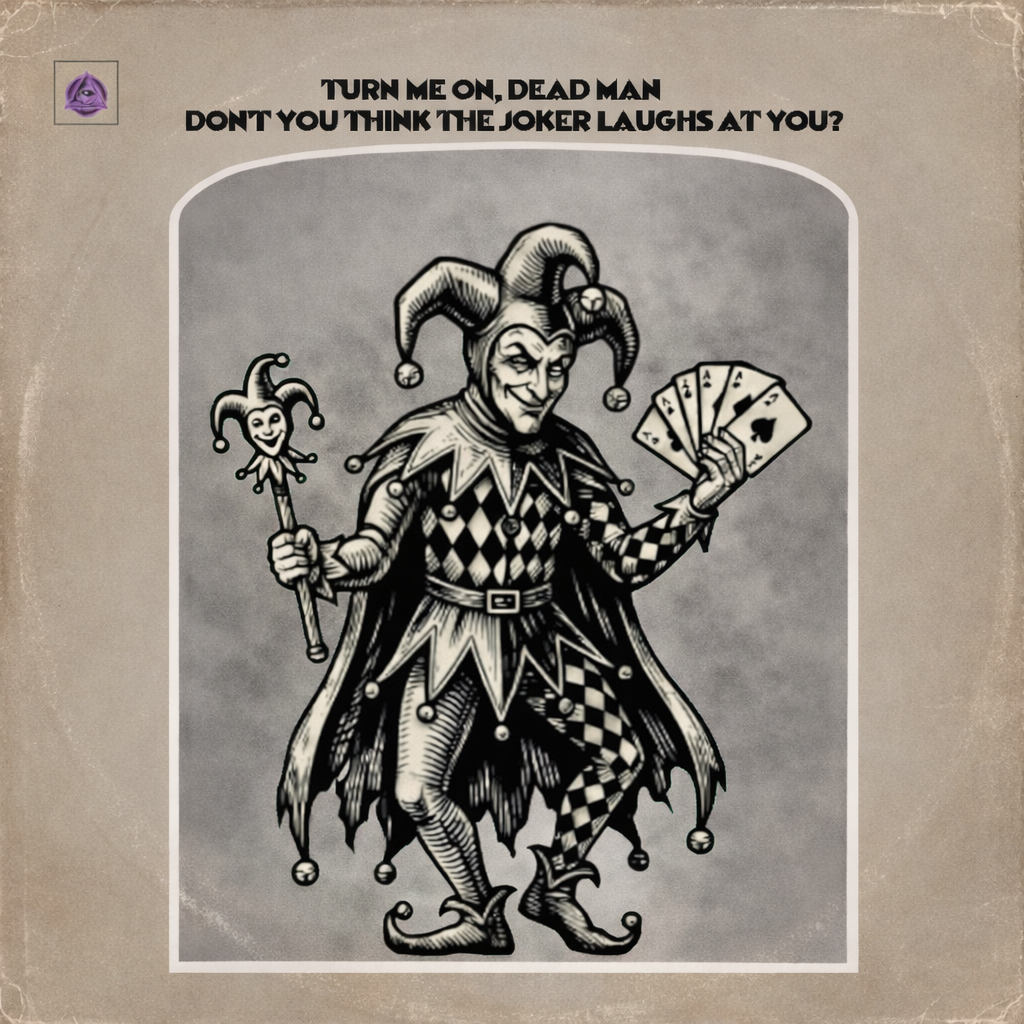
This episode of Turn Me On, Dead Man moves through a wide landscape of contemporary psychedelic music, tracing connections between artists working across continents but often arriving at similar emotional ground. From the dark, shape-shifting art rock of Cult of Dom Keller to the expansive, meditative compositions of Bhajan Bhoy, there’s a shared interest in building immersive sound. Whether it’s Medicina’s “expansive rock,” rooted in decades of experience, or Mirror Revelations’ stripped-down, hypnotic minimalism shaped through live performance, the throughline is one of evolution: artists refining their approach while remaining open to disruption.
Geographically, the episode stretches from Australia to Spain, from Mexico to Taiwan, from the forests of Brazil to the Netherlands and beyond, underscoring how global this current wave of psychedelic and experimental music has become. That reach is perhaps most clearly captured in the collaboration between Victor Kinjo, Yama Yuki, and Patrick Shiroishi, where ancestral memory, migration, and place merge into something quietly transformative. Their work reflects a broader theme running through the episode: music as a meeting point between different worlds.
At the same time, many of these tracks are shaped by artists working through loss and the search for meaning. Robot God’s “Onto the Afterlife” channels the experience of losing a close friend into something that moves between grief and a sense of hope, while Canisbay’s work reflects on heartbreak and the limits of expression. Flower Children of the Apocalypse frame their music as a response to an age of confusion and adversity, where the seeker pushes toward understanding. For Scattered Purgatory, the disruption of the pandemic ultimately becomes a point of renewal. Across these different approaches, there’s a shared impulse not just to dwell in darkness, but to work through it–perhaps not reaching resolution, but still pointing toward some sense of possibility.
2026


#Alternative #Experimental #GothicRock #PsychedelicRock #Weird
Since 2007 these DIY sonic alchemists have been creating whacked out soundscapes and songs that appear to have been born from another universe, all from the confines of their sonic bunker.
‘Unholy Drum’ is the long-awaited sixth album from Nottingham band Cult Of Dom Keller – not a ‘return’, for they were never really gone, but the product of five years spent evolving. In collaboration with Angus Andrew of LIARS on production duties, “Songs were cut apart, inverted, whispered to. Left alone long enough to twitch back to life. All while the fever dream of global instability seeped into the DNA of the record.” The result – due for release March 27th 2026 on Fuzz Club – finds a more expansive and left-field art-rock sound shining through the cracks in the Cult’s dark psychedelic noise-rock.
Reflecting on the time leading up to ‘Unholy Drum’, the Cult – now comprised of Neil Marsden (vocals/keys/synths), Ryan DelGaudio (vocals/guitar/synths) and Alistair Burns (drums) – write: “It’s been nearly five years since we slipped through a crack in the world – and couldn’t find the same exit twice. It was a time where bassists dissolved like mist. Where bodies glitched in ways that felt half-medical, half-mythic. Where everything stalled except the music. Ideas kept arriving. Fragments. Residue. Ghost scraps clinging to existence like unfinished dreams, waiting to become whole. But this time, we wanted to create something totally different.”
And then came LIARS’ Angus Andrew: not a producer in the traditional sense but “a kindred spirit who opened a door we didn’t even know we had locked.” Working with Angus on a LIARS remix of their 2021’Run From The Gullskinna’ single, a new creative relationship was immediately forged and the Cult’s vault of ideas soon pried upon for Angus to dig his claws into:
“Working with Angus brought a different angle of experimentation to the way we worked. Together, everything was dismantled and pushed further into the dark. Sound was dissected until it sprouted limbs. We went so deep inside the tracks that eventually it felt like the songs were waiting for us to catch up… And yet, there was liberation. A freedom in abandoning defined roles. In serving the song rather than the structure. In hearing an idea suddenly explode into life through, say, the force of a full orchestra. It felt like any sound in our heads was now possible, and we continued to craft and shape the songs.”
For all that ‘Unholy Drum’ might mark a departure from the crushingly heavy or freak-out-inclined sonics that characterised much of the Cult’s ever-evolving back-catalogue, the shadowy, post-apocalyptic visions that have always been at the core remain deeply-rooted. Only this time something stranger stepped out, wired directly into the voltage of now. ‘Unholy Drum’ is an album that brushes against our bleak political reality without delivering a manifesto – not a sermon, but the sound of a fever, a possession, a rupture.
“The Unholy Drum is the pulse you obey without meaning to. The rhythm that already owns you. It’s the click-track of modern existence – the subliminal march of markets, governments, algorithms, and the digital ghosts that crave our attention more than our blood. We didn’t name it to provoke. We named it because it was already there. At times it felt less like making an album and more like receiving a transmission from a future we wanted no part of. UNHOLY DRUM is that transmission.”
#FolkRock #Psychedelic #PsychedelicFolk #PsychRock
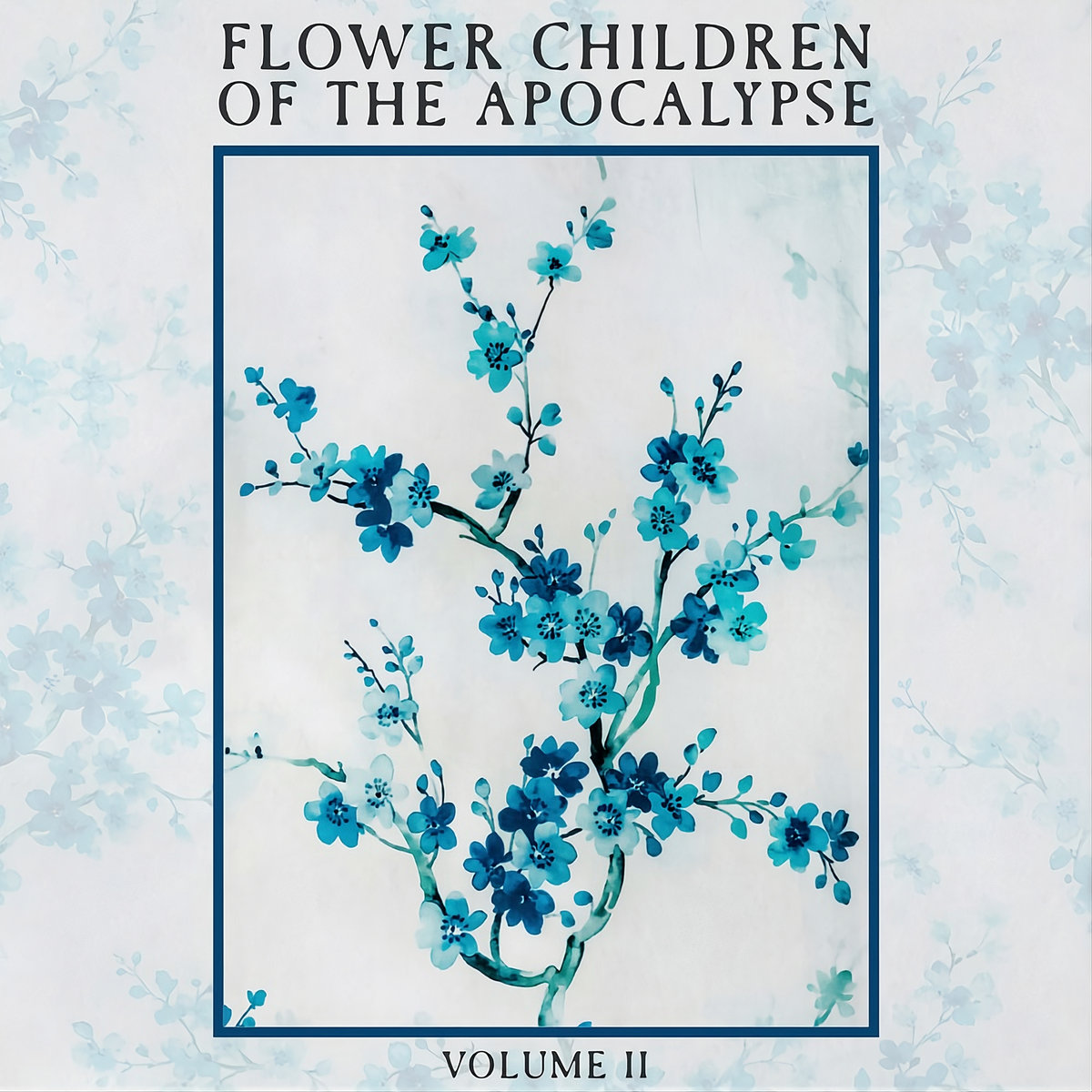
Cloaked in the darkness we carry the light. Australian Psychedelic Folk for the Kali Yuga.
TMODM: “Seeker” feels like a distilled expression of the band’s worldview: searching, spiritual, but grounded. What does the idea of the “seeker” mean to you at this point in the Kali Yuga?
Flower Children of the Apocalypse: We are in an age of conflict and adversity, of suspicion and strife. An age where the common person is lost, without understanding of of their inner workings, and without understanding of their place in the world outside of them. The seeker is the one who strives to overcome the conditions of this age. This is what the song is about.
TMODM: Across your releases there’s a strong thread of apocalyptic awareness, but also light, beauty, and even humor. How do you balance darkness and illumination in your songwriting?
Flower Children of the Apocalypse: You can’t have darkness without light. There’s a tendency to romanticize the bleakness, to wallow in it, or even celebrate it, as if it were a good thing. (Black metal, we’re looking at you) But we aim to rise above these things.
TMODM: Volume II feels cohesive. Did you approach this record with a clearer sense of identity, or did that cohesion emerge naturally?
Flower Children of the Apocalypse: Our first album, End Of Days, has a somewhat disjointed and schizophrenic quality. We were still learning how to write songs with each other. These days we have a much clearer idea of what we’re doing, and that definitely comes through on this new album.
#Alternative #Doom #Doomgaze #HeavyPsych #Noise #Post-punk #Post-rock #PsychedelicRock #Shoegaze #StonerRock
3 noise makers from Toronto
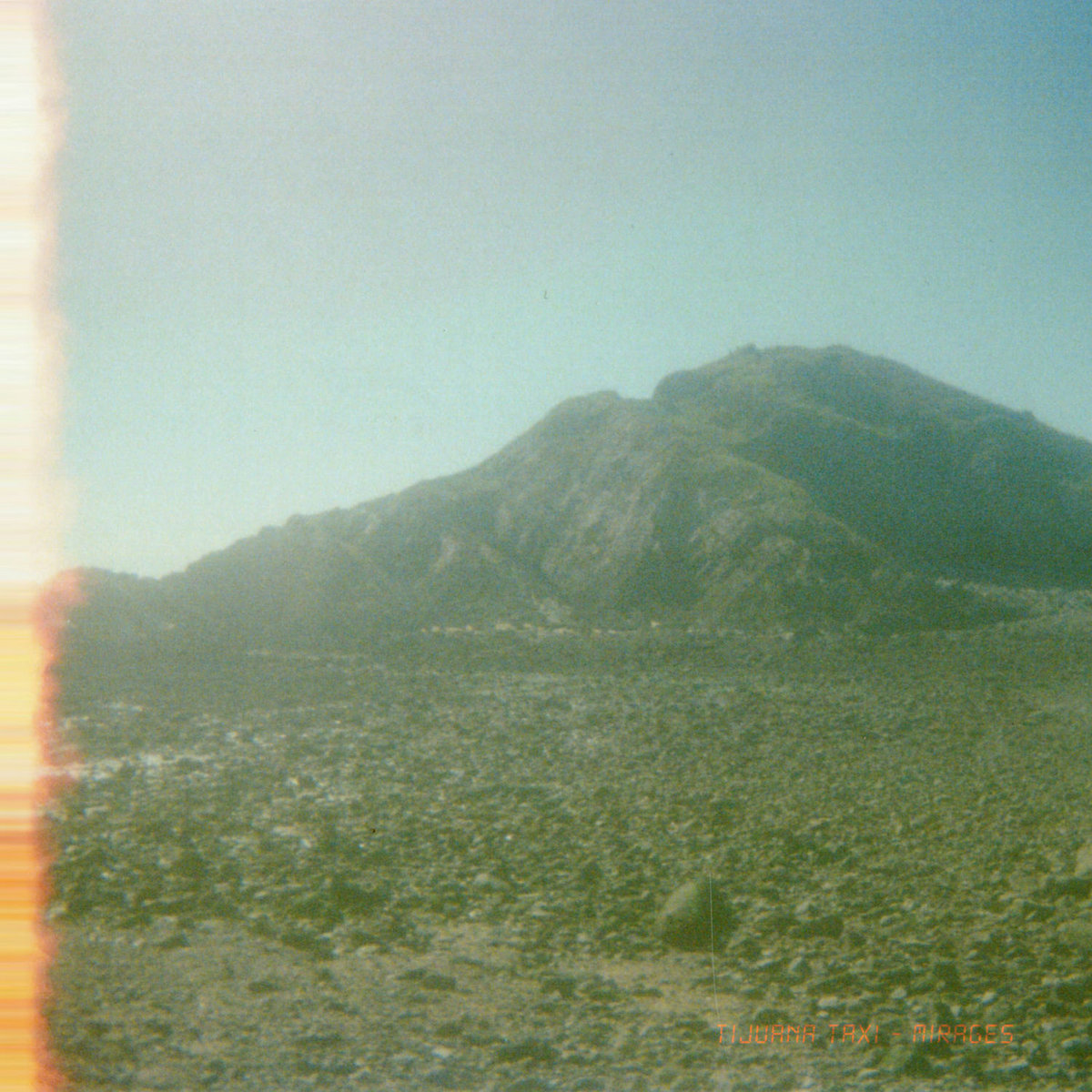
TMODM: Mirages is your debut full-length, nearly eight years in the making, spanning production setbacks and a global pandemic. How did the core identity of the band and these songs change during that long “disconnection and reconstruction” period? Did the album you released in 2026 end up being the one you set out to make back in the late 2010s?
Tijuana Taxi: We wrote about half the album pre-pandemic as a four piece with our former lead guitarist Paula Maglalang. We then tried a couple other lead guitars to replace her after she left the group and ultimately decided to go forward as a trio. Within that whole process there was a lot of creative push and pull towards the direction of the sound and production.
We tried self-producing the record, then working with a couple other people, but we couldn’t quite nail down a sound we were happy with. Eventually Sonder, Erasure and The Ostinatos were written and we had to scrap some older tracks. Then we decided to go back to the team of Jesse Turnbull and Jon Drew to produce/record/mix/master—the same pair that we did our EP with in 2019—and we got this thing finished in a couple months. It was crazy how fast it all came together considering how long the build-up was.
I’d say there weren’t a ton of differences in the sound though. Over the years there’s been small structural tweaks made to tracks like Wander/Mirages, Dru and Mystified, but generally once we’re done with writing a song we’re pretty happy with where it is. We added the interludes after the fact—some degraded tape bedroom recordings Jim made in his late teens—to hammer home the themes of nostalgia, aging and foggy memory sprinkled throughout the record.
TMODM: When you were writing the songs on Mirages, were you working from specific experiences, or more from a mood or atmosphere you were trying to capture?
Tijuana Taxi: These songs were written over so many periods of our lives it’s kinda hard to put together any sort of cohesive idea or goal we were trying to work towards. We’d been performing about a third of the record live during the Paracusis tour in 2019, so I wouldn’t say the record was in any way conceptual.
However, certain themes of insecurity, lost memories, the fear of success and loneliness have been a lot of where the moodiness comes from in our sound since the very start. We also have a lot of influences in atmospheric genres, which helps push us in that direction creatively.
TMODM: Across Mirages there’s a wide range, from blown-out noise to more minimal moments. How do you approach dynamics like that as a three-piece? Does it come from jamming things out, or is it more deliberately structured?
Tijuana Taxi: All of our songs (mostly) start as like, 15 minute jams. Our most frequent songwriting procedure is leaving a recording device in the middle of the room and playing for a few hours. If anything feels good in the moment we go back and clip it, listen to it a bunch, and then figure out what works, what doesn’t work, what the track needs and how to shrink it down a bit.
The original Looking at Air recording is literally 17 minutes long and it doesn’t get to the chorus until like 11 minutes in haha.
As for dynamics, there was something of a conscious effort to bring more dynamics to the sound because if you’re just noisy all the time it doesn’t really sound like anything memorable at all in my opinion. We kinda went a bit crazy with the quiet/loud thing on this record, but I mostly felt like it got a lot of the emotions we were attempting to convey across pretty well.
Robot God are a Psych Space Stoner Rock band from Sydney Australia who offer a powerful blend of space rock, traditional stoner and psychedelia. Fans of Hendrix, Black Sabbath, Pink Floyd, Earthless, The Atomic Bitchwax and Elder would not be disappointed.
Robot God are
Matt Allen – Bass,Vocals & Synth
Raff Iacurto – Guitar, Vocals & Synth
Tim Pritchard – Drums & Synth
TMODM: “Onto the Afterlife” feels like a journey through darkness and light. What was the starting point for this track? Was it driven more by a specific idea, or did the meaning emerge as the music took shape?
Robot God: More often than not—and especially in this case—the music came first. Mat, our bass player and vocalist, brought the initial idea to the band as a collection of riffs, along with a solid sense of how the arrangement might take shape. From there, we spent a lot of time jamming and exploring different directions, trying out various structural ideas until we landed on the version you hear on the record.
Once the music felt right, the lyrics began to take form around it. At the time, Mat was dealing with the heartbreaking reality that his best friend was dying from cancer, and that inevitably shaped the emotional core of the song. The concept of what happens after we die—whether there’s something beyond this life—became a central theme.
In the lead-up to his friend’s passing, they had many conversations about death and the fear that comes with it. But instead of letting that fear take over, those conversations gradually shifted toward something more hopeful—celebrating life and finding a sense of peace, or even optimism, about what might come next. That perspective became a kind of mantra, not just for them, but for us as a band while shaping the song.
Ultimately, those experiences and ideas formed the foundation of the lyrics, giving the track its emotional weight and its sense of moving between darkness and light.
TMODM: On this new single it sounds like you’re pushing further into heavier hypnotic groove. What took you in this direction?
Robot God: Having released three records that leaned heavily on extended psychedelic jams, we felt it was time to evolve and challenge ourselves in a different way. The next phase for us was about writing a batch of songs that were more direct and focused—something that still captured our sound, but delivered it in a tighter, more intentional format.
That shift naturally led us toward heavier, more hypnotic grooves and more traditional song structures. Instead of building everything from open-ended jams, many of the tracks on Onto the Afterlife started as more complete ideas. They were brought into the room with a clearer sense of direction, rather than growing purely from a single riff or improvisation.
It was less about abandoning what we’d done before, and more about refining it—distilling those expansive ideas into something more immediate and impactful.
TMODM: A lot of your music deals with big, cosmic themes. When you’re writing, do you think of it as an escape, a reflection of real-world anxieties, or something else entirely?
Robot God: I think it’s fair to say that all of us in Robot God treat the band, and the music we make, as a form of escape. Like most people, we’re balancing work, family, and the general pressures of day-to-day life, so the band becomes an outlet—a space where we can channel and release that stress into something creative and meaningful.
At the same time, the larger cosmic themes you mentioned feel like a natural extension of that. They suit the sound we’re drawn to, but they also reflect our shared interests—whether that’s the occult, space, or even broader world issues. Those ideas give us a way to process things that can be overwhelming in real life, but through a different lens.
There’s something cathartic about exploring those big, abstract concepts. It allows us to step outside ourselves a bit, while still expressing something real underneath it.
#Electronica #Experimental #Krautrock
破地獄/Scattered Purgatory are from Taipei, Taiwan. Formed in Taipei, Taiwan in 2013, comprised of member Lu Li-Yang and Lu Jiachi, Scattered Purgatory is a name derived from a Taoist ritual which expiates the souls of the innocent from a state in between life and death and then at last, release.
TMODM: The liner notes mention that the three-year hiatus following the pandemic was pivotal to the conception of Post Purgatory, with “time” acting as the main theme, both as a healer and a destroyer. How did those feelings of loss and uncertainty directly shape the heavier, electronic atmosphere of this record?
Scattered Purgatory: During the three years of hiatus, both of us stepped on different paths in terms of making music—Jiachi went on as a solo electronic club music producer, and Liyang joined the 11-piece big band “Island Futurism” as dub engineer and keys. So we reformed with a very different context. That’s how we decided to make a very different album while still keeping the same core as before.
TMODM: You recorded half of this album at home and the other half at the same studio where you composed your first album. How did physically returning to that original creative space help you reclaim your voice and bridge your past with this forward-looking new sound?
Scattered Purgatory: The room acoustic and good old amps we’re familiar with, plus many ideas from the recording engineer Bert, allowed us to try out different tones and ways to reamp.
TMODM: The lyrics for “海市蜃樓 — Ocean City, Mirage Tower” are incredibly poetic, evoking fading shadows and shifting sands. How did the multilingual landscape of Taipei influence its creation?
Scattered Purgatory: Jiachi thinks that lyrics shouldn’t be divided by languages in each sentence, so he mixed Taiwanese, Chinese and English and put the three languages into one sentence to create this unique rhyme.
#Experimental #AcidPunk #Alternative #Grunge #Shoegaze #SpaceRock
Medicina are from Algeciras, Spain
Medicina is a trio formed in Algeciras by Alberto and David, veteran musicians of the local scene in Southern Spain . They’ve been playing together since the early 90’s in several bands like Ballet Violencia, Xudor Barato, among others.
David Ruiz was the drummer in the well known Stoner Rock Band Viaje A 800 (from 1996 to 2008) , and also in buenamuerte trio (from 2010 to 2013). After multiple line-up changes, Jose “Pot” Moreno (Viaje a 800, Atavismo…) finally joins the band as bass player in 2018.
Medicina began playing in 2012, performing a mix of genres like Shoegaze, Grunge, Post Punk and Space Rock, but anyway they prefer to call it “Expansive Rock”. Their main influences are bands like : Loop, Sonic Youth, Joy Division, Spacemen 3, Suicide, Telescopes, The Stooges, Lagartija Nick or Nirvana, among others.
TMODM: Your earlier work has roots in shoegaze, but your newer material feels heavier and more direct while still maintaining atmosphere. How has your sound evolved on La forma de ondas, and what pushed you in that direction?
Medicina: We are people who like all kinds of music, from jazz to electronic music, including the entire rock history. We don’t like to be pigeonholed into a single style, as we are very eclectic.
TMODM: “Muerta con Dignidad” deals with very intense themes—illness, pain, and the idea of dignity at the end of life. What drew you to explore this subject, and how did you approach translating it into music?
Medicina: We believe that everyone has the right to decide how their life will end; it is a very recent issue in today’s society, and we uphold the right to choose.
TMODM: The video for “Muerta con Dignidad” uses retro and analog technology in a way that feels both nostalgic and unsettling. How do those visuals connect to the themes of the song?
Medicina: The director of the music video, Antonio Crespo, is passionate about analog images and perfectly captured the lyrics of the song with those images. When we saw it for the first time, we thought it was perfect and we are very happy with the result.
#Krautrock #KrautrockDisco
Mirror Revelations are from Toluca, Mexico. Exploring endless repetition and hypnotic minimalism trough motorik pulses, analog synths, and distorted bass.
TMODM: When we spoke around the release of Aura, you described the music as shaped by dreams and a more spiritual atmosphere, but Ígnea feels darker. What changed for you between those two records?
Mirror Revelations: Wow! It’s very noticeable, right? Yes, we definitely still believe that the music has a very spiritual focus. However, every time we sat down to compose, it felt like something was telling us we couldn’t keep going without addressing the topics that concern us—especially ones that could be combined with the sound to create a stronger message.
To give a bit more context, Gaby and I are always talking about many things. We can be having coffee, beer, or just driving, and we share a lot with each other. Our conversations range from music, film, etc., to geopolitics and philosophy.
So we understood that this album had to be like the night—more revealing, something that shouts and says what we sometimes wish we could shout so more people can hear it.
That’s why we now approach themes of protest and resistance, more in tune with the dark times we’re living in today. That’s really why this album feels darker.
TMODM: You’ve mentioned that Ígnea was stripped back to better reflect the live experience, with a focus on repetition and intensity. How did that “less is more” approach shape a track like “Liberar”?
Mirror Revelations: Yes! With Aura, what happened is that we added a lot of instrumentation and layers to each track because it was our first album as Mirror. However, we’ve always really liked minimalism. Right now, we try to live a lighter life, with fewer possessions and more order.
When we tried to bring Aura into a live setting, we realized it was very difficult to do without relying on backing sequences (which limits improvisation) or having too many people on stage. Personally, I don’t like bands or projects that have too many musicians on stage—I think three people, or even fewer, are enough.
So “Liberar” was built around a rule: it had to be something that three people could perform live without extra layers or samples.
TMODM: The album centers on ideas of resistance and transformation. When you’re writing and performing this music, do you think of it as a personal expression, a political statement, or something more universal?
Mirror Revelations: We see it as a personal expression that carries elements of resistance and protest, but also creates a moment to reflect on unity and organization as ways to build a better world. We truly believe that’s possible.
#Experimental #Ambient #Electronica #Ghosts #Improvisation #Psychedelic
Victor Kinjo is a Japanese-Brazilian singer and researcher with roots in Ryukyu Islands/Okinawa. He and Yama Yuki, born in Japan, met while the latter lived in Brazil. When Yama traveled to Kinjo’s studio in the deep Brazilian Atlantic forest, he expected to play Japanese and Okinawan traditional folk music. Yet when the session started, instead of following any particular musical thread, their sounds naturally flowed into something unclassifiable. Kinjo and his partner, Eduardo Colombo, sang as if they were communicating with the lost souls of Japanese immigrants from the past. Afterwards, Kinjo and Yama invited celebrated Japanese-American saxophonist Patrick Shiroishi to add his unique talents to the project.
It is a little-known fact that Brazil has the biggest Japanese and Okinawan immigrant community outside of Japan. Encouraged by labor agreements to relocate with their families, destinations varied widely. Large numbers chose the United States, Canada, the Philippines, Peru, China, and especially Brazil. Those who responded included a large Okinawan contingent fleeing poverty and colonialism after the formal annexation of the southern Ryukyu Islands. As it was for communities in the US, Japanese immigrants in Brazil endured unimaginable struggles to establish themselves. This was especially true during World War II, when they were systematically discriminated against for being Japanese or of Japanese descent.
Urabon refers to a Japanese Buddhist festival which takes place in summertime, when ancestral souls are said to return to this world and visit their relatives. The festival dates back to the 7th century, believed to have been adopted from Indian and Chinese culture. The ritual was modified to suit the Japanese tradition of animism, with various ways to celebrate. Today, the festival is simply called “Bon” or “Obon,” but the original word is “Urabon” — possibly derived from the ancient Persian “Urvan” for “souls.” We decided on “Urabon” instead of the conventional “Obon,” since it alludes to other geographical connections and feels more suited to the idea of ancient souls. This also subtly alludes to the production of the album, joining artists from different parts of the world together for the first time.
Yama Yuki – objects, electronics, field recording and mix
Victor Kinjo – voice, keyboard, percussion, koto
Patrick Shiroishi – saxophone
TMODM: The liner notes mention that the original recording session in the Brazilian Atlantic forest was intended to focus on traditional Japanese and Okinawan folk music, but naturally evolved into communicating with the “lost souls” of the immigrant past. What happened in those early sessions that pushed the music in this unexpected direction?
Yama: Kinjo’s studio is located in Mogi das Cruzes, an area with a significant Japanese immigrant community. Situated in the remains of the Atlantic forest, the studio has a unique octagonal shape where our inspiration flows naturally. During our sessions, we find ourselves half meditating and half listening to and playing sound, which ultimately shapes the direction of our music.
Kinjo: Me and my partner chose to live in the Atlantic Forest as part of a deeper process in which I came to understand myself as a nikkei, a Brazilian and a diasporic Indigenous subject from the Ryukyu Archipelago (Okinawa), Japan.
The territory of Mogi das Cruzes is also Indigenous land, long before the arrival of colonizers.
I sense that many ancestors inhabit this space, also Oxum, Papa Dambala, Oxossi and all the Olorum.
Our singing process emerges from sound before language: from breath, vibration, and sometimes from words that belong to no defined language. Uchināguchi, the language of my ancestors, is endangered, and I never learned good Japanese either. Still, I feel that these languages live in my body and resonate through the voice.
The encounter with Yuki Yama’s music unfolded in a deep and fluid way, allowing these different layers — personal, ancestral, and territorial — to coexist in sound. The sound emerged as a form of listening rather than expression.
From my perspective, there was no clear moment where the session “shifted” — it was already something else from the beginning.
TMODM: Could you share a bit about the specific creation of “Goku”? How did the physical environment of the forest itself influence this piece?
Yama: There are some field recordings and object sounds that I recorded during the session.
Kinjo: At that time there were no names for the different tracks. We didn’t act as if we were in a recording session, we were just there, in the space, us, with the instruments and the sound and silences of the Atlantic Forest.
For the sounds and silences of the forest I mean the Atlantic Orchestra of birds, trees dancing with the winds, drops of rain falling calmly or violently, thunderstorm.
TMODM: The concept of Urabon, with its connotations of connections of souls, beautifully mirrors the global paths of the Japanese diaspora. How did bringing your distinct personal geographies and experiences together shape the emotional core of this album?
Yama: We all have Japanese origins, yet our personal experiences—and our understandings of the soul and of Japanese immigrant history—diverge. Through sound and our engagement with the spiritual, we found a shared ground. Perhaps, in some way, we are all seeking to communicate with souls, and to gently soothe them.
Kinjo: Our ancestral roots and our different transcultural experiences create a shared ground that unfolds through silence and sound. Not everything can be held in words. Listening becomes our way of meeting. In that space, music allows different memories and presences, from the Atlantic Forest to the Pacific Ocean.
#Alternative #ArtRock #Experimental #PsychedelicFolk #PsychedelicRock
Canisbay is from Niagara Falls, Ontario. Rock from the Niagara wilderness.
TMODM: When we spoke in 2024, you were working toward Woodland Creatures and incorporating field recordings and themes of wilderness. With this new EP, the focus feels more intimate and emotional. How did that transition happen for you?
Canisbay: After Woodland Creatures, and Jester’s Privilege, which were more experimental and less song-based in nature, I wanted to go back to having more songs with lyrics, which was one of the original intentions when forming the band in 2021.
TMODM: “In Some Way Love Makes Life Make Sense” centers on heartbreak and the weight of words. What inspired this more personal direction, and how did it shape the songwriting?
Canisbay: Most of my songs are inspired by my personal feelings, experiences, emotions, dreams, and observations. “In Some Way” is a song of loss, and the acceptance of the end of something beautiful. It also deals with the effects of our communication and actions, and how the weight of our feelings can go beyond our limits of fluent expression.
TMODM: The EP feels very stripped back but still carries a strong atmosphere. How do you decide how much to include in a song versus what to leave out?
Canisbay: The song was recorded around the same time as the album With Love, and some of Wild Lullabies. It was a time when the only full-time members of the band were myself and my dog Luna. The percussion was a mix of djembe, finger cymbals, and my banjo head as a snare. Most of the arrangement is there to serve the song.
The next album will have a bigger, and more developed sound overall, and will be more band-oriented.
#Experimental #Ambient #Drone #Electronica #FieldRecordings #KosmischeGuitar #ModernClassical #PsychMagick #Shoegaze
Bhajan Bhoy is based in NH, Netherlands. Deep meditative music filled with kosmische guitar psych magick / sonic raga trips / melodic mantras / esoteric electronica that thrill and elevate the listener to a higher sonic plane.
TMODM: On Meditations the pieces are expansive. When you’re working on a track like “Stargazing,” are you thinking in terms of composition, or are you shaping a kind of space for the listener to inhabit?
Bhajan Bhoy: The most important thing for me is the song / track / composition (call it what you want). You start with a very basic idea and you build on it. When you’ve built on it and added a lot of tracks on the recording, then the editing part takes place.
For me it’s really important that the composition moves and has dynamics…it’s the journey that counts. You want to bring everyone on board and take the listener to somewhere special. The creation of space within a track is a difficult thing to achieve, especially if you have recorded a lot of tracks. The real art is to maintain the soul of the track whilst cutting back on stuff.
Sometimes you are given a new perspective on a track by stripping back on stuff…which is often a highly pleasant gift.
TMODM: You’ve described your process in the past as very organic, starting from a small idea and letting it evolve. With Meditations, did that process change at all, or did it naturally lead you into this more meditative direction?
Bhajan Bhoy: The process for Meditations was very much the same as previous albums. The germs of ideas are laid down and then I build on it. I will sometimes let things lie still on a track for a few days or a week or two, and then revisit it with fresh ears. From the first listen thereafter, I will hear new things that I want to add, and then the skill is to try and execute those ideas as quickly as I can before I lose the feel or forget the idea.
Other times I will experiment with different instruments and see what works. When I record ideas, I will often record tracks for a long length of time and then edit it later. But these tracks felt so natural at a longer length that it shaped the way I wanted to go.
TMODM: You mentioned that these pieces became more meaningful to you over time, especially as personal changes unfolded. When you listen back to something like “Stargazing” now, does it still feel like the same piece you recorded, or has its meaning shifted for you?
Bhajan Bhoy: I still get the same feeling that I had when I recorded them. These are tracks to bring comfort and solace. When I listen back to the tracks, I hear things that I didn’t expect (with sounds and instrumentation and dynamics) and it’s a beautiful thing.
I hope that listeners who hear these tracks will cherish them as four beautiful musical compositions that bring them joy.