
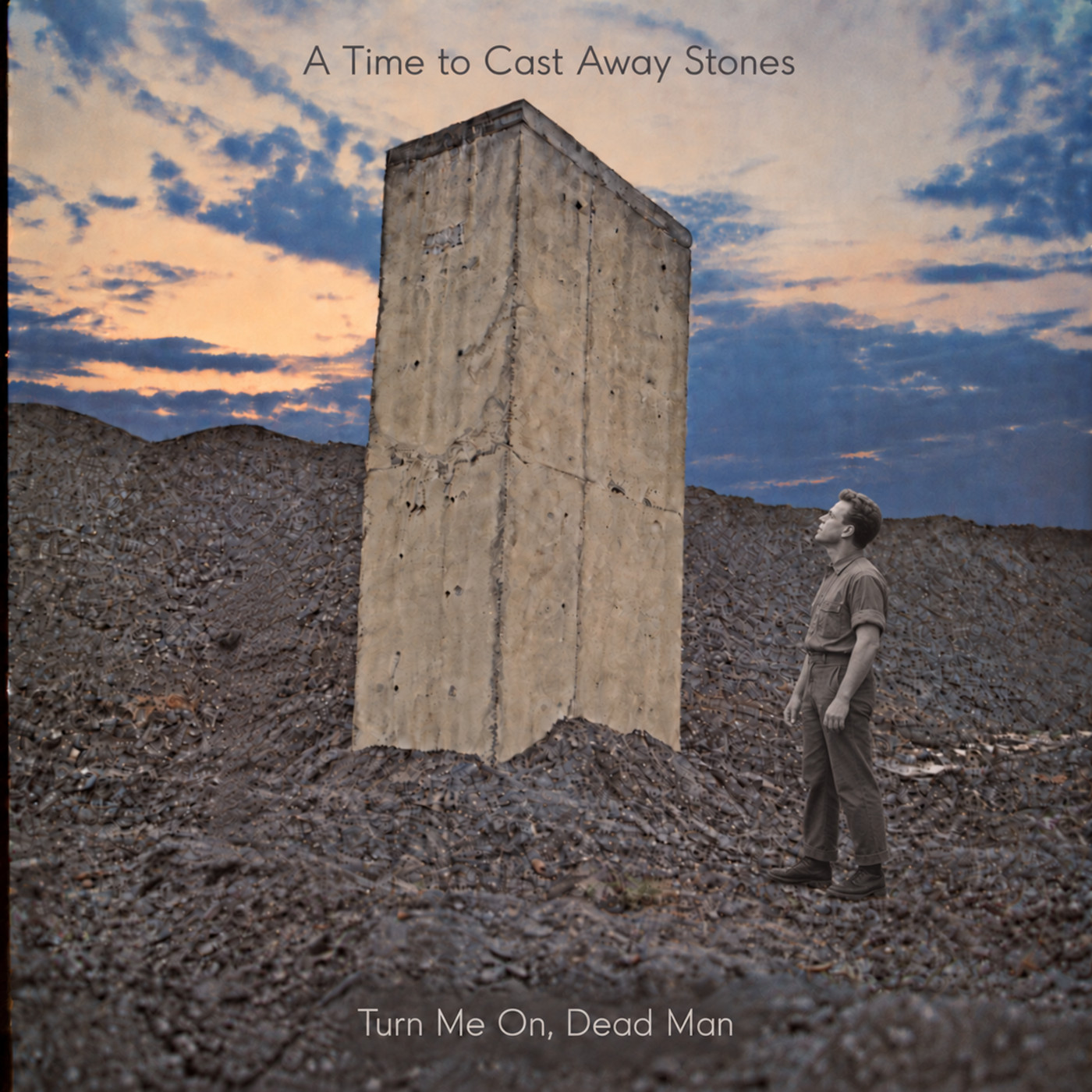
A meditation on impermanence meets a science-fiction encounter with the unknown, accompanied by psychedelic sounds from creative collaborations old and new. Recent releases from Ambassador Hazy, Carlton Melton, Shit the cow, Dope Purple, Flower Children of the Apocalypse, Trem 77, Mossmen, Druid Fluids, and Echoes of Distant Stars.
| Time | Artist | Track Title |
|---|---|---|
| 01:30 | Dope Purple | Dope Purple Haze |
| 08:46 | Shit the cow | Out of My Hands |
| 12:02 | Carlton Melton | Spirit Lens |
| 19:27 | Ambassador Hazy | Fat Cat City |
| 22:21 | Flower Children of the Apocalypse | What Am I To Do |
| 25:21 | Trem 77 | Blue Shines Through (Granular Matter Mix Strings Mix) |
| 28:12 | Mossmen | Earthbound |
| 37:02 | Druid Fluids | Needles in Strawberries |
| 43:39 | Echoes of Distant Stars | Archon |
2026
2027
A few days ago I was listening to the New York Times podcast The Daily and they were interviewing a mathematician from Cornell named Steven Strogatz. In the discussion he was talking about how AI had solved a longstanding problem that had vexed mathematicians, exhilarating and depressing at the same time. That humanity had created something that could outdo the greatest minds is both a great achievement and a troubling development at the same time. He started talking about the Book of Ecclesiates, and the song "Turn! Turn! Turn!" got stuck in my head.
Psychedelic Scum Freaks from Taipei, Taiwan.
TMODM: You’re calling the Desertfest Berlin release the first chapter of an “Official Bootleg” series. What made you want to start releasing these raw audience recordings, and what do they capture that a more conventional live recording might miss?
Dope Purple: All of Dope Purple’s releases are actually live recordings to begin with. One of the main differences between our regular releases and the “Official Bootleg” series is that when we’re not on tour, we don’t really play live—we don’t even go into the studio. So these bootlegs capture us in a very extreme situation: playing almost every day during a tour and recording those performances as they happen. Because of that, I think they have a much more raw and immediate quality.
This way of working is also rooted in my personal love of Free Jazz culture. On this tour, we recorded 18 out of 24 shows, and there are performances where the exact same song feels completely different from night to night. You could never deliberately recreate that kind of variation.
So with the “Official Bootleg” series, I want to actively release some of those almost “mutated” versions of our songs—performances that happened spontaneously and could only have existed on that particular night.
TMODM: I played the Live Evil version of “Dope Purple Haze” earlier this year, with Kawabata Makoto joining the band. What feels different to you about the Desertfest version, played by Dope Purple alone on your first night in Europe?
Dope Purple: In my mind, Kawabata Makoto is basically not a human being, but some kind of yokai or supernatural creature. 😂
When we played “Dope Purple Haze” with him, it felt like the band was literally fighting him with sound—Dope Purple vs. Kawabata Makoto.
The Desertfest version feels quite different to me. Since we were the very first band playing that day, I wasn’t particularly nervous. We were pretty relaxed, and because it was also the very first day of the tour, I felt that we were in really good condition and able to play at our full potential.
As the “Official Bootleg” series continues, you’ll hear Dope Purple starting from that kind of strong, fully charged state and gradually getting more and more insane as the tour goes on. I hope you’ll enjoy hearing how far things mutate from night to night.
Shit the cow makes scrapyard rock in a small cabin in northern Sweden. It´s the sound of an old rusty truck crashing in to a tree.
TMODM: You’ve said before that Shit the cow often starts with one idea and then ends up somewhere completely different. On Injuries, did you go in with a clear idea of what the record should sound like, or did that emerge as you played?
Shit the cow: We got really inspired after the last recording session and had a lot of different ideas. One was to make a surf rock album. But as usual, the songs took off in other directions.
It was not until the mixing that we really understood what kind of record we were making.
TMODM: The band has spent years working across long distances, sending riffs and ideas back and forth. Has that changed now, or is that still part of how a Shit the cow song comes together?
Shit the cow: We still work intercontinental. This, of course, affects the songwriting process. It's an intense Dropboxing that goes on for months. Then we get together in the studio Rissna City in Jämtland, Sweden, for a couple of days to record.
TMODM: You’ve released a steady run of EPs over the last few years, but Injuries feels like a more substantial statement. Did making a full album change the way you approached the material?
Shit the cow: Yeah. We still had the same short period of time to make the record, so the fact that there were eight instead of five songs probably contributed to the decision to make it a bit more naked and raw than the latest recording.

American instrumental psychedelic free-rock jam band, based in San Francisco.
TMODM: Anthony Taibi is now fully part of the band, and Reason Beings was recorded live as a four-piece. What has his presence changed about the way Carlton Melton plays together?
Carlton Melton: Anthony is fully part of things now, recording and also playing live when he has the time. His presence is knowing he’s there fleshing out the sound further with synths and occasional guitar. He is subtle in his approach, so it’s maybe like a nice security blanket at times. To describe it would be like adding a heavy gravy or tasty broth to a solid meal.
TMODM: Carlton Melton’s music feels very tied to playing together in the moment. How often do you get to play live, and how important are those shows to keeping that chemistry going?
Carlton Melton: Playing live is what we are built for, I think. The recordings are a conduit to playing shows for people. We would do it more if we could afford to and if there was maybe more demand.
We are for sure very underground and DIY, which is fine, but it takes a lot of work and sacrifice for us to be able to play and tour these days, it seems. Probably explains why we typically try to save our money to tour the UK and Europe every few years or so.
We do like to crank it up loud and live and let people hear and see the chemistry on a stage in a venue.
TMODM: When a new Carlton Melton piece starts, is there usually an idea or structure already in place, or do the songs tend to emerge from improvisation?
Carlton Melton: The songs during recording completely emerge from improvisation. When we tour or play a show, we have a structure and set list and have improvisation in certain parts during songs.
The recordings are a template we work off of to make a live set.

Ambassador Hazy is a solo recording project by Sterling DeWeese who was previously in a slew of obscure bands including Heavy Hands, Dirty Rainbow, Terrapin Gun, Madison Electric and Black Fantastic.
TMODM: You’ve described Ambassador Hazy as essentially a one-man-band project. When you’re building a song by yourself, what usually tells you that it’s finished rather than just ready for another layer?
Ambassador Hazy: I guess you could say it's mostly an intuitive process. Usually I build the song to a certain point, do a rough mix, and then listen to it repeatedly to figure out what I think is absent or what needs editing in the mix.
If, for instance, I feel the vocal isn't coming across, I may go back and double the vocal or try adding a harmony vocal, or maybe try some different delay, etc., until I feel that it sounds like it's reading in technicolor instead of black and white.
A lot of it has to do with the soundscape and the balance of the mix, but also from a production point of view I'll be looking for empty spots needing a little extra something. For this record I really spent a lot of extra time polishing mixes and adding extra bits to get a more lush final product. I think this is my most "produced" record to this point.
TMODM: These songs are full of strong melodies and hooks, but you also leave plenty of room for fuzz, repetition and odd little detours. When you’re recording, how do you know when to leave a good pop song alone and when to start messing with it?
Ambassador Hazy: I am often (or always) surprised how the songs come to life and end up as something that would qualify as a "pop" song, as I usually don't actually start with a song. That is, I don't sit down with a guitar and write the progression and the lyric and then record the song.
I usually start with a rhythm track. That might be as simple as turning on one of my vintage drum machines and finding a cool beat, or sometimes I'll "play" the drum machine and create a sequence with different parts, adding in breaks, etc. Likewise, some songs start with live drums as a backing track (sometimes I'll add live drums over the drum machine track, sometimes replacing it, sometimes complementing it).
So when I'm doing that I'm thinking about a song format so that I have some sort of aperture to which I can attach the song that doesn't exist yet. I usually have some sort of intro hook or fill, then A and B parts and maybe a bridge or outro if I'm getting fancy. I keep it simple so I can follow that pattern when adding the next layer, like a bass line or rhythm guitar.
The melodies then come from my interaction with those parts; usually, it doesn't happen all at once. A song usually develops over many sessions (though occasionally, when inspiration strikes, they may come together faster). One day I will do the basic rhythm track and the next I'll add the first guitar part, then bass, etc. I find it works better if I concentrate on each piece, getting a cool sound and a decent take.
And then comes all the icing on the cake, the lead lines and vocal melodies. Usually, the layers add up into a finished song and when they don't, I abandon it and move on.
TMODM: What does “Fat Cat City” mean to you, and how did that idea become the thread tying the record together?
Ambassador Hazy: Fat Cat City is the world we live in today, a world of greed, a world of oligarchy, a world that is a very cynical place where it seems we've lost our way and forgotten some of our basic humanity.
It's hard not to touch on these themes given the context in which the music is being created. While the music is for me personally a form of escapism, it isn't a place to deny reality; it's a place to examine and reflect it.
I think side one is pretty heavy on this theme. The first four songs are deliberately grouped together as they are more or less thematic, and then the rest of the record delves into other sorts of more personal themes, mostly of an existential, relational nature.
Cloaked in the darkness we carry the light. Australian Psychedelic Folk for the Kali Yuga.
TMODM: When we talked earlier this year, you said the band now has a much clearer idea of what it’s doing. Has that changed the way you experiment with new ideas?
Flower Children of the Apocalypse: In a paradoxical way, the more clearly the vision of the project becomes, the more open we are to change and experimentation. Preconceived notions about adhering to strict ideas of genre fall aside, and what remains is the drive to create something pure, regardless of genre or style.
TMODM: You’ve now worked with Bleunwenn on both “Light” and “What Am I To Do?” What does she bring to the music that makes you want to return to that collaboration?
Flower Children of the Apocalypse: Bleunwenn is such a wellspring of creativity. She possesses a certain raw talent and a creative process that gels well with us, so working with her is practically effortless. No promises, but we suspect there will be more songs together in the future.
TMODM: You’ve described the band as trying to rise above the darkness rather than simply dwell in it. As the world around you changes, has your idea of what Flower Children of the Apocalypse should offer the listener changed as well?
Flower Children of the Apocalypse: Yes and no. It seems things around us are getting worse, and it's harder to avoid a certain melancholy, which certainly comes through in this particular song. But ultimately we are committed to overcoming the spirit of the age above all else.

Trem 77 is based in Bristol, UK. Instrumental textural audio. Inspired by nature and effects treatments. Always listening for the beautiful micro events in sound.
TMODM: The idea of sandpainting suggests something carefully made but deliberately temporary. What drew you to that image as a way of thinking about sound?
Trem 77: For me, sound, or audio as I like to term it, is beautifully fleeting by the nature of the waveforms traveling through the listener's auditory and emotional processing centers.
You never have the same experience twice in listening to the same piece of audio. I also view audio itself as a productless form of expression. When you take away the vinyl or other tangible commercial or promotional holders of the audio, you come to realize that the beauty of sound or audio is that it is something beyond the visible or "holdable." There is a physical vibrational response that can only be experienced in the moment of listening engagement, and then the experience or memory is up to the listener's ability to hold onto memory of the experience, which is quite different from that momentary fleeting transience of the actual experiential nowness of hearing.
With the album I decided to focus on the "grain" of the audio. I am a lover of harmonic distortion and audio that sounds "aged." There was also an attempt in the original versions of the tracks to make sure that there was deliberate space between the grains of sound. The tracks themselves are very hard to hold onto in memory, at least for me. Even after working on the tracks for extended periods, I could listen back while mixing and find new spaces and interactions between the grains that were unexpected.
It sounded like grains of sand being blown away in the wind, which is why I ended up at the concept of sandpainting.
Sand painting is also, for me, an emotional and spiritually deep art form. For the Navajo and Tibetan practitioners it is sacred, and the transience is what actually creates the deepest meaning.
TMODM: When you were working with Henrik Meierkord’s recordings, were you trying to preserve something recognizably “string-like,” or were you more interested in transforming them into another kind of sound altogether?
Trem 77: To be honest, Henrik blew my mind with his strings and the ways he recorded them. The cello is my favorite stringed instrument just after guitar, but I often take my recorded guitar parts into places where people think that I am using modular synthesis. I like to think that capturing the resonances that are only possible with stringed instruments is an important part of what I am trying to do. However, I also like to deliberately atomize any semblance of the original instrument and view it as just another modulation device.
There are many instances of Henrik's cello completely untreated in the tracks, but then there are moments where the strings merge into the grains of the tracks through some effects treatments. Part of the wonder of creating the tracks with Henrik was just to find a balance between the resonances of the recordings that he made and allowing space for them to interact with the grains of my tracks.
It was a very natural fit as I worked on them, and I do not hear the individual tracks when I listen to the combination of the two. I wanted to let the listener hear the original minimal tracks from the Phantom Circuit session so they could understand what happened when Henrik became part of the audio.
TMODM: The Phantom Circuit recordings and Henrik Meierkord’s strings seem to come from very different places. What was the common thread that allowed you to bring them together on the same record?
Trem 77: The raw minimalism of the original tracks had an intended space which emphasized the grains of audio for me. When I create tracks I often hear where a counterpoint or melody is hinted at but not added by me. My favorite recordings do not fill in every space for the listener. They leave space for the listener to interact with the direction the audio takes but also leave out traditional layers of melody on the top.
It is the magyk of audio to imply a vast ever-shifting harmonic beauty even in sounds that some might term "non-musical," for example the drone of a fan or the wind. It is all up to the listener to listen deeply enough to hear that beauty.
Henrik has an ear for this ability to "imply" harmonic beauty without having to play a melodic line. He serves the sounds as they are, and this is a rare ability. I still cannot believe some of the moments that he allowed me to create when I mixed the tracks. The sounds come together because he listened to exactly what was there to begin with. I cannot tell you what a wonder that is for me to be able to hear in the results.
For me, an audio recording is never finished. It is always just a version, especially in the dub sense of that word. Any track can be stripped and reworked. So I don't see that the original tracks are all that separate from the Henrik versions. There is a core there, just like in a dub track, but the expansion and space created can be practically boundless.
Heavy spacey plant-based rock music grown organically in Madison, Wisconsin.
TMODM: On Sunstream, you talked about looking for comfort and peace in the natural world. Earthbound feels much more concerned with the limits of being human. What pulled you in that direction this time?
Mossmen: Earthbound is very much about looking beyond our restrictions, searching for spirituality and finding a desire to be able to move past the things that keep us from being our complete selves.
TMODM: The title track keeps returning to the idea that no matter how much we imagine escape, we’re still “Earthbound.” Did that idea come first and shape the song, or did it emerge from the music as the track developed?
Mossmen: The idea for the title track very much emerged from the music. It's a 9-minute song with two distinct parts. As we were working it out and performing it live, getting ready to record it, I would find myself kind of floating along in space for the first half and then snapped out of it and pulled back to earth to lock in for the second part.
The lyrics came from that physical feeling and visual idea.
TMODM: You describe the release as a “sonic triptych.” Did these three songs begin as separate pieces, or did you realize fairly early that they belonged together as one larger statement?
Mossmen: The songs all began as separate pieces. We have another album we are working on, and it seemed evident they were not going to fit into that release, but they vibe together.
All the lyrics were written around the same time, and they have a similar lo-fi/live quality. The release was not intentional from the beginning, but now it feels like it was.

Adelaide based psychedelic bliss pop
TMODM: Your first album came together over a long period, but Pareidolia seems much more deliberately unified around perception, patterns and the way we impose meaning on things. Did having that central idea change the way you wrote the songs?
Druid Fluids: Totally. It was interesting writing a conceptually driven album, as each song speaks to a different idea but is fundamentally anchored to an overarching concept. This certainly came with its challenges.
Outside of the lyrics this also had an influence. I wanted the music to sonically reflect the disorientating nature of navigating facts vs. feelings, navigating the labyrinth of whether or not what we're seeing is just a projection of our biases. I think I was aiming to sonically reflect an M. C. Escher piece.
TMODM: “Needles in Strawberries” is such a vivid title. Did that image come first and shape the song, or did the title emerge after the music was already taking form?
Druid Fluids: For those unfamiliar, the song's title was inspired by the 2018 strawberry tampering scandal, where consumers and supermarkets were finding sewing needles embedded within their strawberries. I used that visceral imagery as a metaphor for Australia itself. Beneath the country's sweet, easy-going “no worries” attitude lie the sharper realities of its colonial legacy and the ongoing exploitation of its land in pursuit of economic gain.
When I first saw the headline, I wrote it down. I found the image incredibly striking. I'd say the music and concept existed separately for a while and then eventually glanced over at each other.
TMODM: Druid Fluids started largely as your studio project, but the band has developed into a much bigger live presence, including national touring, a European tour and WOMADelaide. Has playing this music with a full band changed the way you now write or arrange material in the studio?
Druid Fluids: Surprisingly, it actually started more as a jam band. My way of shedding that exoskeleton and becoming more considered in my approach was to start writing and recording demos. I became enamoured with the idea of developing a home studio that could give me the freedom to create beyond demo standards, so I started collecting gear and teaching myself how to produce.
I think the recording and live realms very much exist in their own spaces, but they aren't divorced from each other in any way. They frequently blow kisses to each other. The studio gives me the freedom to tinker, scrutinise and explore ideas; the rehearsal space is then a fun experiment of how it translates when we perform it. We are no strangers to fucking with arrangements and making songs 10 minutes longer.
So I don't necessarily write for the live band now, or vice versa. They're more like two sides of the same process. The studio allows me to push the music in one direction, and the live band brings a different kind of life and unpredictability to it.


Echoes of Distant Stars are a Psychedelic Space Rock band from Newcastle Upon Tyne. Formed in early 2025, the band blends influences from kosmiche, prog rock, folk and psych. In parts delicate and melodic, in others heavy and cacophonous, other parts weird and ethereal, the three piece of Alex Johnston (Drums), Tom Astley (Guitar), and Dave Molnar (Bass) have brought to life a panoply of long-form, semi-improvised concept pieces.
TMODM: Echoes of Distant Stars emerged from Snakes Don't Belong in Alaska. What about your approach changed when this trio came together?
Echoes of Distant Stars: I think the biggest change musically has been around the ideas of rehearsal and creating different iterations of tracks. With SDBIA, there was a sense of “total improvisation”… we would joke that we could never remember the pieces, but there was a sense that they were invented in the moment without any pre-composed materials.
And the paradox of that was that the totally “blank canvas” approach started to become more constrictive, and so the pieces kind of started to become quite similar. When everything is being improvised, there’s a lot less you can do with chord changes, with melodies that become anchor points.
Really, when Dave joined the band on bass, we started to revisit previous jams, recording several versions of the same piece. And this really allows for a lot more freedom, an opportunity to explore even further, and to push the weirdness, because there is more familiar ground, more confidence that the whole thing won’t fall apart.
TMODM: How often does Echoes of Distant Stars get to play live, and does performing these long-form pieces change the way they develop?
Echoes of Distant Stars: We play live as much as we are invited to! We’re playing a couple of gigs this month with the incredible Firefriend from Brazil, which we’re really excited about, and we have some big plans for 2027.
Playing live certainly has changed our approach to developing pieces, in a few different ways. Now that we have fairly well-thought-out structures to the pieces we play live, we can really take some risks live with the structure, with some of the parts we play and with the way pieces develop.
I think there’s also things that we do live that we don’t when recording. There are bits that work live that maybe don’t in recording… which is interesting to think about.
But we’re also responding to the energy in the room, from people listening as well, which we obviously don’t do when recording. Recording, we’re listening to one another, and collaboratively finding a pathway through the song. Live, we’re doing that with the energy, with the input of people listening.
And when you see people with their arms folded, eyes closed, and heads nodding, you know you’re on the right path!